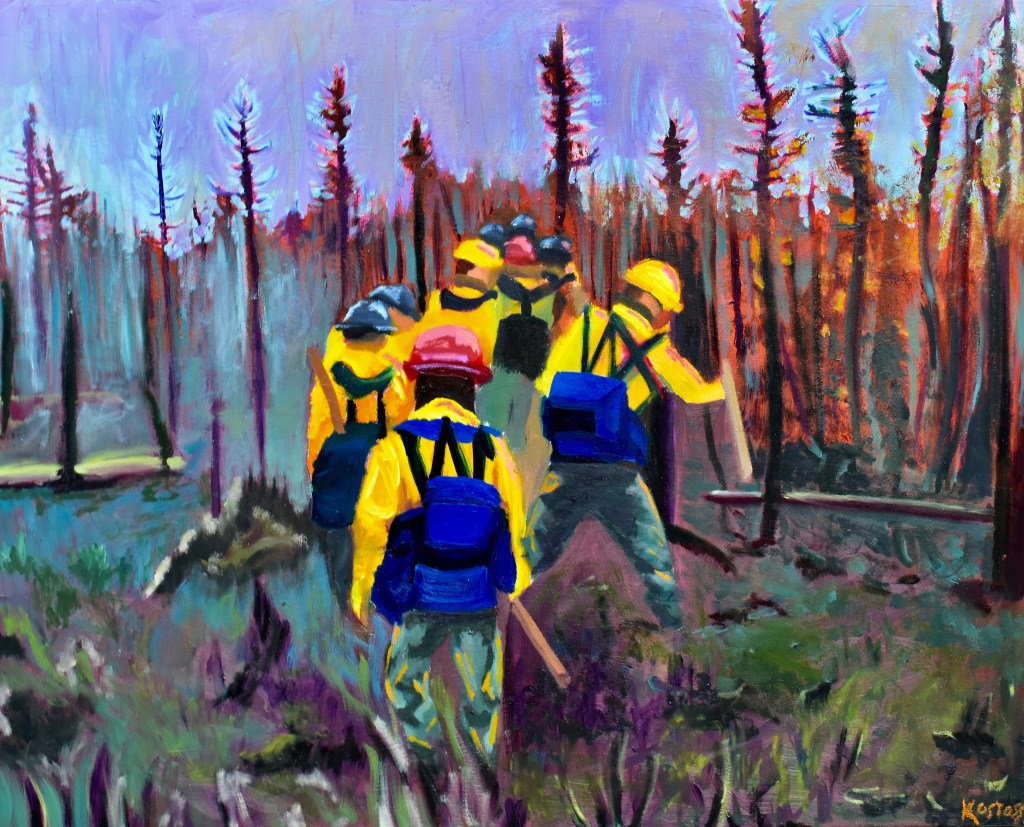
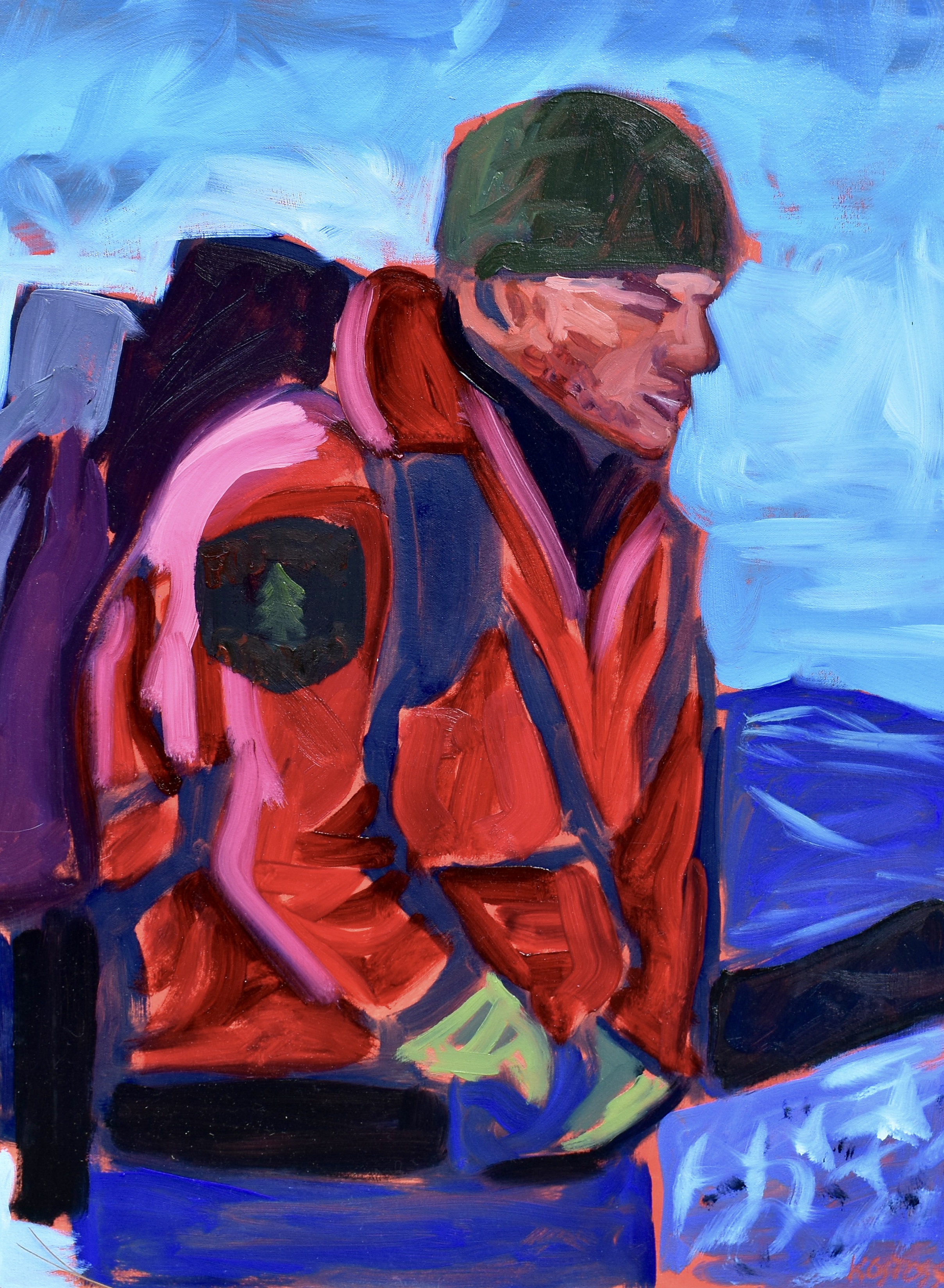
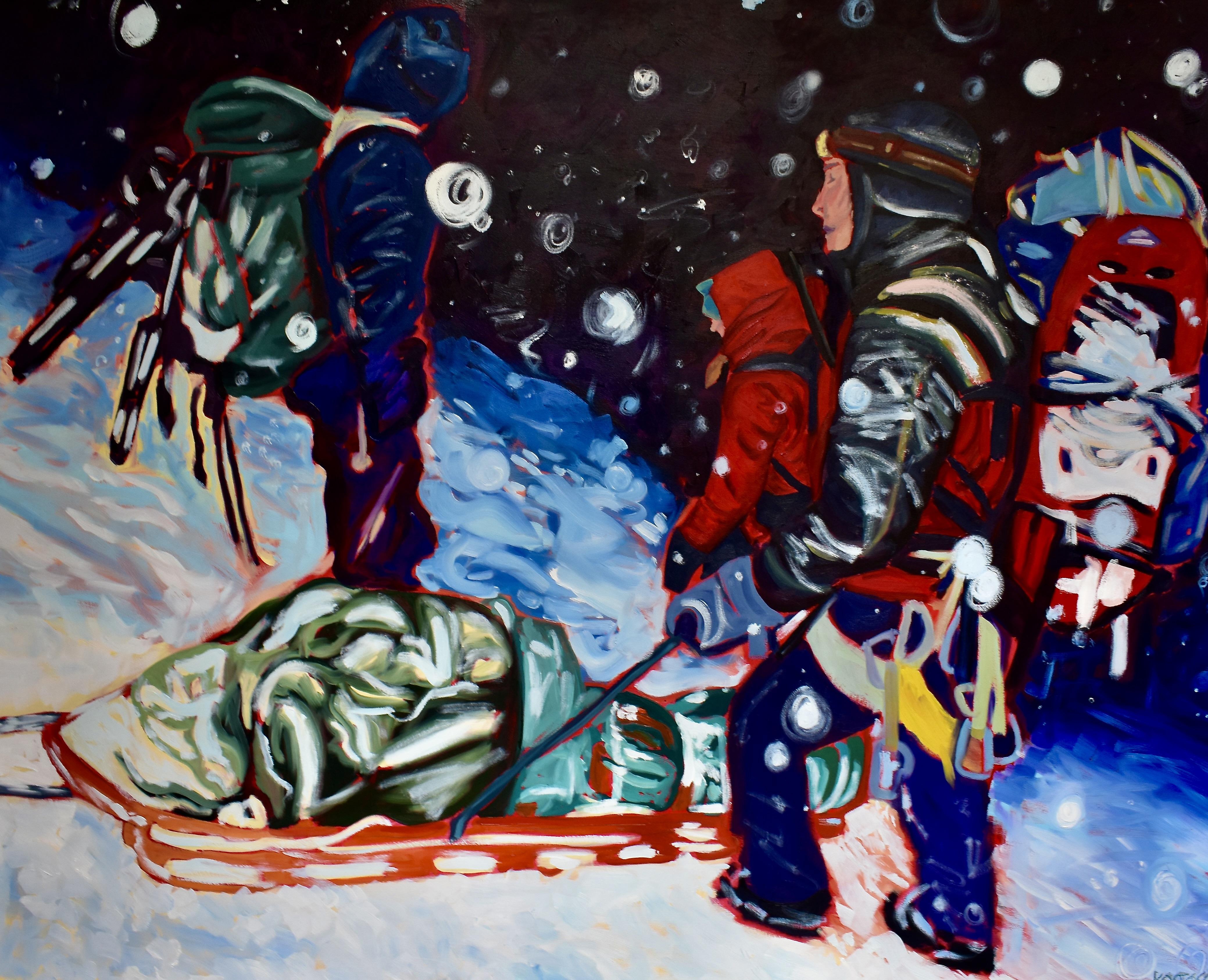
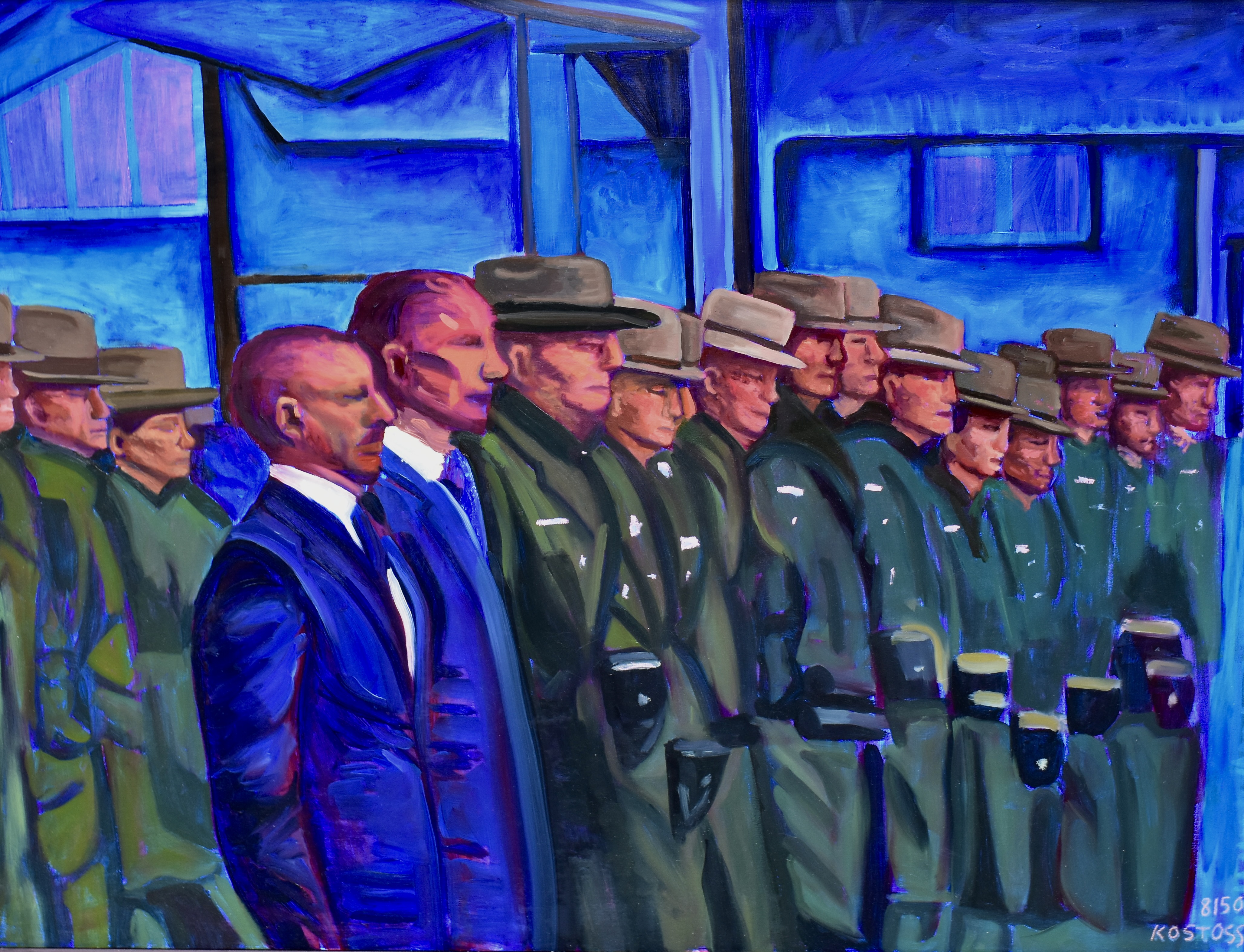
8150 was exhibited at the Brush Art gallery in Canton, NY, this past spring in This Already Happened as well as Keene Arts in Divergent Spectrums III this summer. This series features four paintings that explore the physical and psychological tension at the heart of Adirondack Park forest rangers’ work, a duality marked by both heroism and hardship. On one hand, these rangers are life-savers, educators, and environmental defenders, undertaking missions that are noble and deeply impactful. Yet, the same work that brings meaning also carries an immense personal cost. The burden of citizen’s lives lying in their hands takes a toll on the individual, building over time.
What does it mean to inform a family of a tragic loss? To dedicate countless hours to a search, only to arrive too late? How does the steady decline of our natural environment feed a quiet sense of failure or futility? And how do these pressures, combined with isolation and the emotional grit required to endure them, contribute to the mental health crisis within this community? What systems are in place to support them, and more importantly, where do those systems fall short?
These questions climactically converge in “Final Call for 8150, Captain Christopher Kostoss,” a painting that depicts a funeral scene from a line-of-duty suicide of former Forest Ranger Captain Kostoss in the Adirondack region. At its focal point stands former DEC Commissioner Basil Seggos, who just delivered a speech in honor of Kostoss. The rigid overlapping figures address the duality of this career path: where individuals feel both a strong communal connection, yet also a sense of isolation in coping with the trauma they encounter during search and rescue missions. The figures stand at attention, paralyzed by a stigma that hushes mental health struggles. Connected by their uniforms, the officers grieve their leader, colleague, and friend.
This series examines the intertwined themes of community, grief, resilience, and isolation. It pays tribute to those who serve our communities along with our natural world, while also confronting the emotional cost of the job. As the demands of recreational tourism and climate change continue to escalate, especially under the reign of the Trump administration, the urgent need for systemic change within an under-resourced Department of Environmental Conservation becomes all the more clear.
 Madison Kostoss